
Frederik Walla
Offering a multidisciplinary approach to technical challenges through expertise in PCB design, robotics, and programming in C, C++, and Python.
Providing teams with technical precision and project management experience gained at BMW, Audi, and Kirinus Health. Driven by technological revolutions, the goal is to contribute high-level problem-solving to innovative engineering projects.
Mechatronics Engineer
Skills:
Hardware: PCB Design, Mechatronics, Micro-Sensors
Software: C/C++, Python, MATLAB
Tools: CAD, Systems Design, Rapid Prototyping
Languages: German (Native), English (Fluent), Swedish (B1 ➔ C2)
Experience:

Engineering a specialized mobile robot for human skin traversal. This complete hardware-software cycle bridges theoretical research with physical application by integrating:
AI visualisation of original idea, current state not yet disclosed.
User-Centric Prototyping: Iterative mechanical design adapted specifically to human physiological constraints.
Custom Electronics: Miniaturized PCB design developed to manage complex sensing and actuation.
System Integration: Seamless communication between Micro-Sensors and higher-level Cyber-Physical Systems.
Master Thesis: Skin-Traversing Robotic System | TUM × KTH
Digitalization & Process Optimization | Kirinus Health GmbH
Transforming internal accounting workflows through targeted digitalization. This system-level optimization replaced legacy manual methods with a leaner framework, integrating:


Workflow Automation: Streamlining administrative processes to significantly accelerate operational speed.
Systemic Accuracy: Implementing digital verification to eliminate human error and ensure strict data correctness.
Manufacturing System Design | BMW Group
Optimizing large-scale automotive production through a strategic cooperation with the Fraunhofer Research Society. This initiative developed core expertise in manufacturing system design by bridging research with industrial application:


System Analysis: Evaluating the complete manufacturing lifecycle to map both environmental impacts and structural efficiencies.
Process Integration: Embedding stage-specific sustainability measures directly into active production workflows.
B.Sc. Mechanical Engineering | TUM
A rigorous foundation in classical engineering principles, combining academic theory with practical application through eight months of industry internships and a six-month international exchange. Core technical competencies include:
Mechanics & Materials: Thermodynamics, Fluid Mechanics, and Structural Analysis.
Computational Engineering: CAD, MATLAB/Simulink, and digital system simulations.
Control & Robotics: Control Technology and foundational robotics architecture.
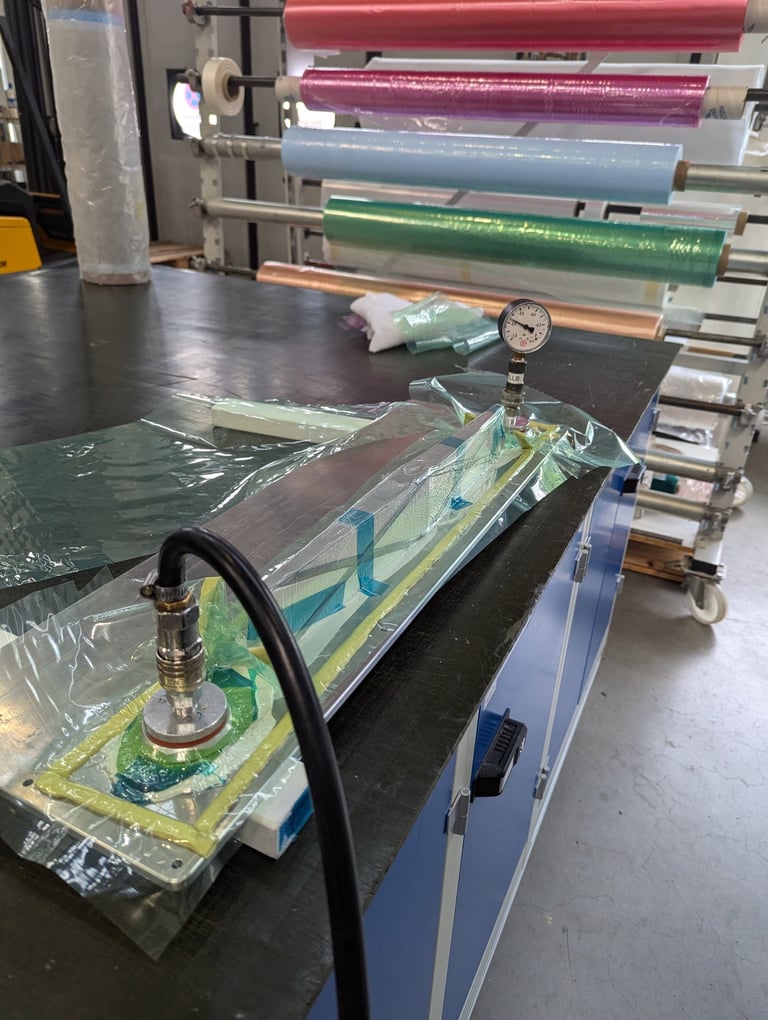
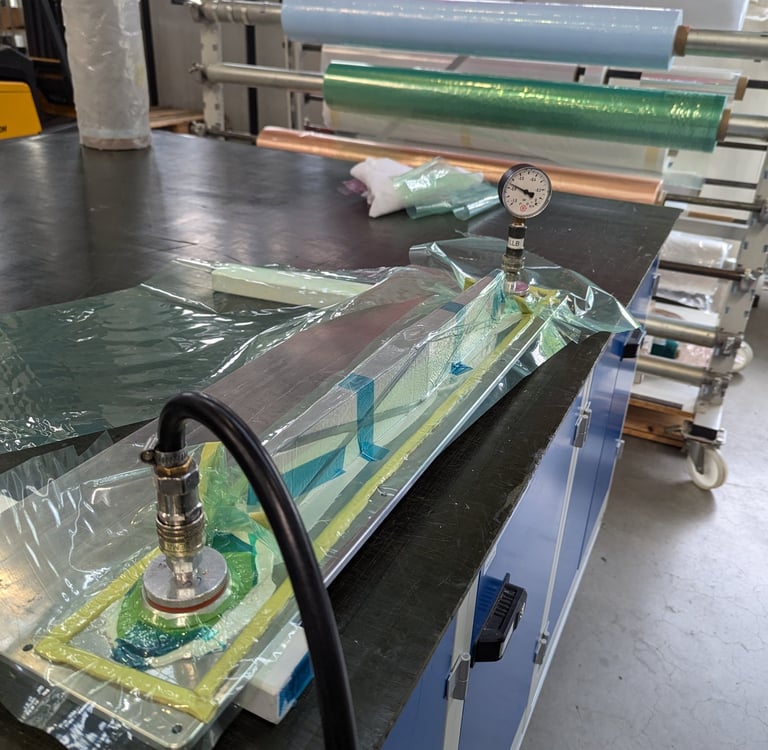
Complementing computational engineering and electronics design with hands-on fabrication, including the manufacturing of carbon fiber composites.
Mechanical Production | AUDI AG
Supporting automotive manufacturing at the Neckarsulm plant through the hands-on application of core fabrication methods. This foundational experience focused on the physical realities of vehicle production:


Manufacturing Techniques: Executing essential subtractive manufacturing and assembly processes, specifically milling, turning, and welding.
Production Systems: Navigating the active manufacturing system to understand the holistic transition from raw components to final vehicle assembly.